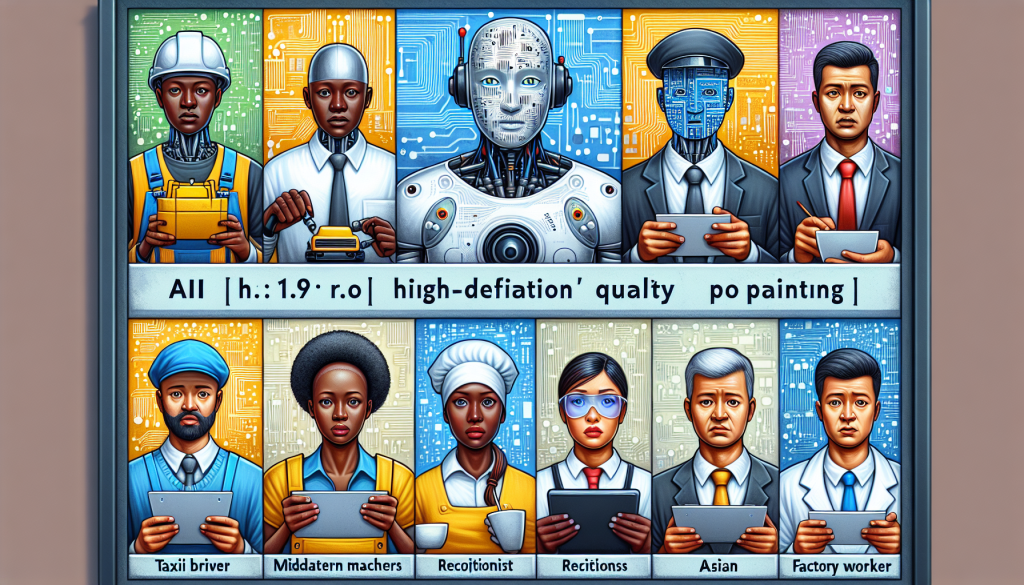
AI Disruption: What Jobs are Most at Risk?
Artificial Intelligence (AI) has rapidly advanced in recent years, revolutionizing various industries and reshaping the job market. While AI brings numerous benefits and opportunities, it also poses a threat to certain job roles that could potentially be automated or replaced by intelligent machines. In this article, we will explore the impact of AI disruption on the workforce and identify the jobs that are most at risk of being displaced by automation.
The Rise of AI in the Workplace
AI technologies, such as machine learning, natural language processing, and robotics, have become increasingly sophisticated and capable of performing tasks that were once exclusive to human workers. From automated customer service chatbots to self-driving vehicles, AI is transforming the way businesses operate and deliver services.
As AI continues to evolve, its integration into various industries is expected to accelerate, leading to increased efficiency, productivity, and cost savings for organizations. However, this technological advancement is also creating concerns about the displacement of human workers and the potential consequences for the labor market.
Jobs at Risk of Automation
While AI is poised to create new job opportunities in fields such as data science, AI development, and cybersecurity, certain job roles are more susceptible to automation and AI disruption. Jobs that involve repetitive tasks, routine decision-making, and manual labor are particularly at risk of being replaced by AI-powered systems.
Some of the jobs that are most vulnerable to automation include:
- Administrative Assistants: Tasks such as data entry, scheduling, and basic correspondence can be automated through AI-powered tools and virtual assistants.
- Warehouse Workers: With the rise of robotic automation and autonomous vehicles, the need for manual labor in warehouses is diminishing.
- Telemarketers: AI-driven chatbots and voice recognition systems are increasingly used to handle customer inquiries and sales calls.
- Drivers: Self-driving vehicles and delivery drones pose a threat to jobs in transportation and logistics.
Preparing for the Future of Work
As AI disruption continues to reshape the job market, it is essential for workers to adapt and acquire new skills that are in high demand and less susceptible to automation. Industries that require creativity, critical thinking, emotional intelligence, and complex problem-solving are likely to remain resilient in the face of AI disruption.
Furthermore, policymakers, educators, and businesses must collaborate to ensure that workers are equipped with the necessary training and support to thrive in an AI-powered economy. Initiatives such as reskilling programs, lifelong learning opportunities, and workforce development strategies can help mitigate the negative impact of automation on the workforce.
In conclusion, while AI disruption brings about significant changes to the labor market, it also presents opportunities for innovation, growth, and advancement. By understanding the jobs that are most at risk of automation and preparing for the future of work, individuals and organizations can navigate the challenges of AI disruption and thrive in an increasingly digital and automated world.